Welcome to the 8B Preserve
The 8B Preserve is a dedicated bird, bee, and butterfly sanctuary in Illinois, that is located right in our yard. Our mission is to provide a safe, chemical-free haven for local wildlife while educating the public on the importance of urban and suburban conservation and biodiversity. By meeting the Illinois Audubon Society’s requirements, we strive to create a sustainable habitat that supports the delicate lifecycle of the animals we serve.
Sustainable Wildlife Avian Habitat
To support our local ecosystem, we have carefully curated a variety of natural resources and shelters to support this avian habitat and pollinator habitat:
- Water Sources: A 3-season fountain that we plan to make a 4-season fountain, a traditional bird bath, and shallow watering dishes specifically designed for bees all provide water for the animals we serve.
- Shelter & Nesting: We have multiple bird houses and trees, a brush pile for wildlife protection, and various perches throughout the property.
- Natural Foraging: A diverse range of trees, shrubs, and wildflowers, including blackberry and gooseberry bushes, riverbank grape, and Virginia creeper all populate the property.
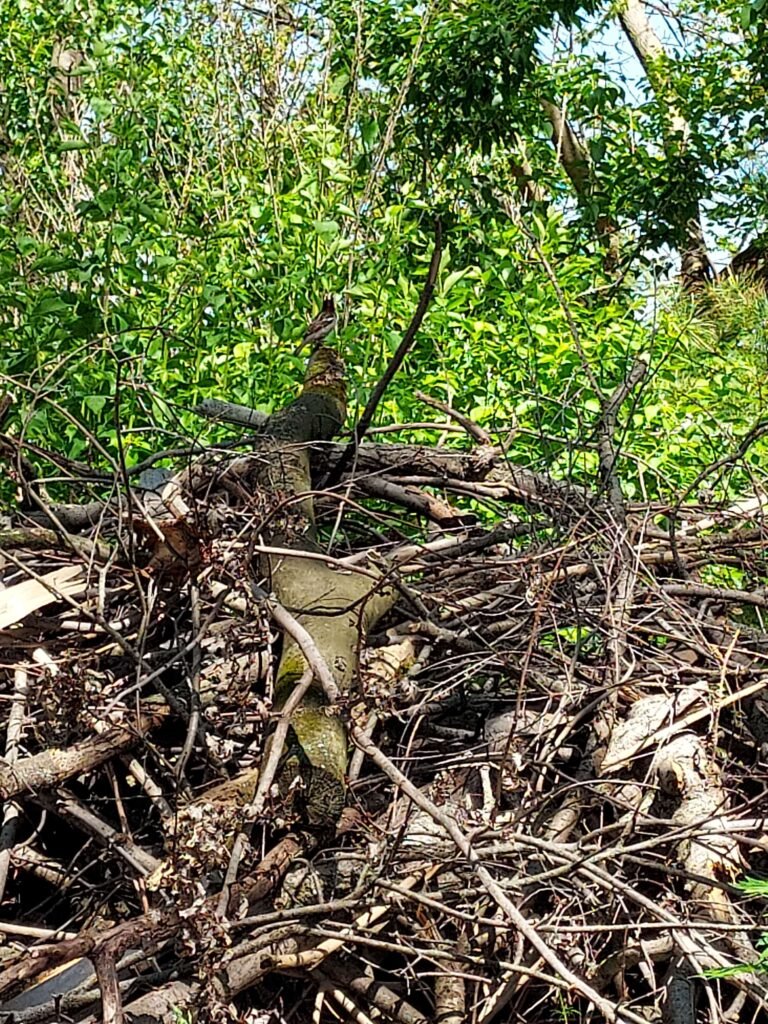
The brush pile below provides shelter for birds and frogs. Can you spot any of them in the photo?
Our Native & Garden Flora
Our bird, bee, and butterfly sanctuary is home to a wide array of plants that provide nectar, pollen, and host sites for insects and birds. We grow milkweed for Monarchs alongside hostas, violets, and what some call “weeds” but are actually beneficial plants for people and wildlife alike. These include comfrey, chicory, dandelion, prickly lettuce, narrow-leaved and broad-leaved plantain. Our garden also features flowering vegetables like tomatoes and peppers, proving that human food production and wildlife conservation can go hand in hand.
Strict No-Chemical Policy: To protect our pollinators and avian friends, we never use chemical herbicides or pesticides at the 8B Preserve. We remove by hand any invasive or harmful plants. That may include pulling the plant up including the roots, cutting down to the ground any that are too big to pull (such as invasive trees) or applying boiling water or vinegar to the plant.
Rethinking the Modern Lawn
One of the goals of the 8B Preserve is to encourage people to look differently at the plants and landscapes around them.
Many of the plants growing here are commonly labeled as “weeds,” and people use poisons called herbicides to kill those plants in their yards. Dandelions, narrow-leaved and broad-leaved plantain, violets, chicory, prickly lettuce, and other plants are often removed from lawns simply because they are not grass. However, many of these species provide food, shelter, nectar, pollen, or medicinal value for both wildlife and people.
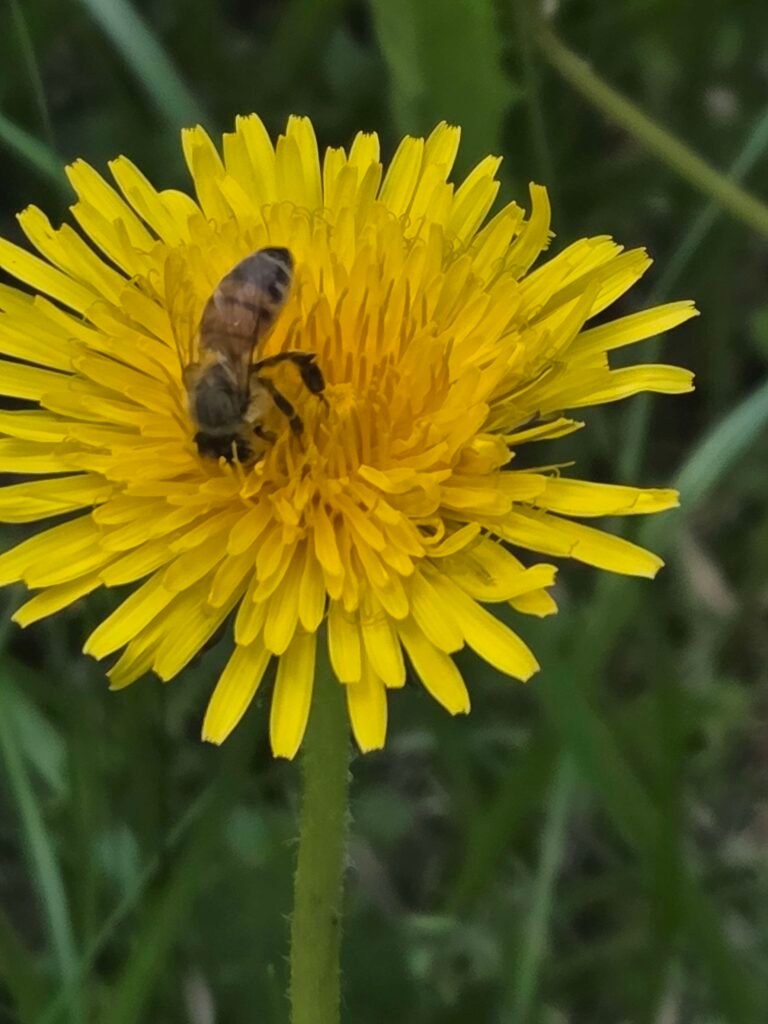
A dandelion may be viewed as an unwanted plant by some people, but bees see an important early-season nectar source. A patch of violets may appear untidy to some homeowners, but it provides habitat and food for numerous insects (and people). Even narrow-leaved and broad-leaved plantain, plants commonly targeted by weed-control products, are edible and have a long history of medicinal use. They serve ecological functions within a diverse landscape and don’t deserve to be eradicated.
For the last few decades—a very short time compared to multiple millennia of humanity’s existence—the American ideal of a perfect yard has often been a neatly maintained monoculture lawn consisting primarily of turf grass. Those serve the corporations who sell chemicals and lawn mowers, not the environtment or the people who want to have food to eat. Perhaps you’ve heard the saying, “If bees die, we die.” While those monoculture lawns can certainly be attractive and useful for recreation, they provide limited food and habitat for wildlife when compared to more diverse landscapes.
A yard covered entirely in grass that is kept too short to produce seed might satisfy municipal ordinances, but it offers no nectar for pollinators, no seeds or berries for birds, and minimal shelter for beneficial insects. Maintaining those lawns usually requires wasting water, gasoline, and oil; mowing and weedeating, and applying fertilizer, herbicides, and pesticides—fuel, time, effort, and money better spent elsewhere, in our opinion and that of experts.
In contrast, a diverse habitat containing flowering plants, shrubs, trees, ground covers, and natural areas can support hundreds of species of birds, bees, butterflies, moths, and other beneficial wildlife. Diversity creates resilience. When many different plant species share a space, wildlife can find food and shelter throughout the year.
At the 8B Preserve, we are not trying to create a perfectly manicured landscape. We are trying to create a functioning ecosystem despite the fact that we are disabled and have limited abilities and resources. Areas of our property are allowed to grow more naturally in order to support the wildlife that depends upon them.
Among the 8B Preserve Beliefs is this one: a yard can be safe, beautiful, productive, and ecologically valuable at the same time. By embracing a wider variety of plants and looking beyond the pedestrian monoculture lawn, homeowners can play an important role in supporting local biodiversity and creating healthier communities for both people and wildlife.
Start Your Own Sanctuary
If you are looking to start your own bird, bee, and butterfly sanctuary (or any combination of those), great! There are some requirements, such as supplying food, shelter, water, and space for the animals. Here’s an additional resource, on native bees (more links coming later):
Support the 8B Preserve
Here are some of the tools and feeders we recommend to keep your pollinator habitat visitors happy and healthy:
As an Amazon Affiliate, I earn from qualifying purchases made through the links above. It does not add to your costs in any way.